The Leak Fix
Your bench
isn't weak.
It's leaking.
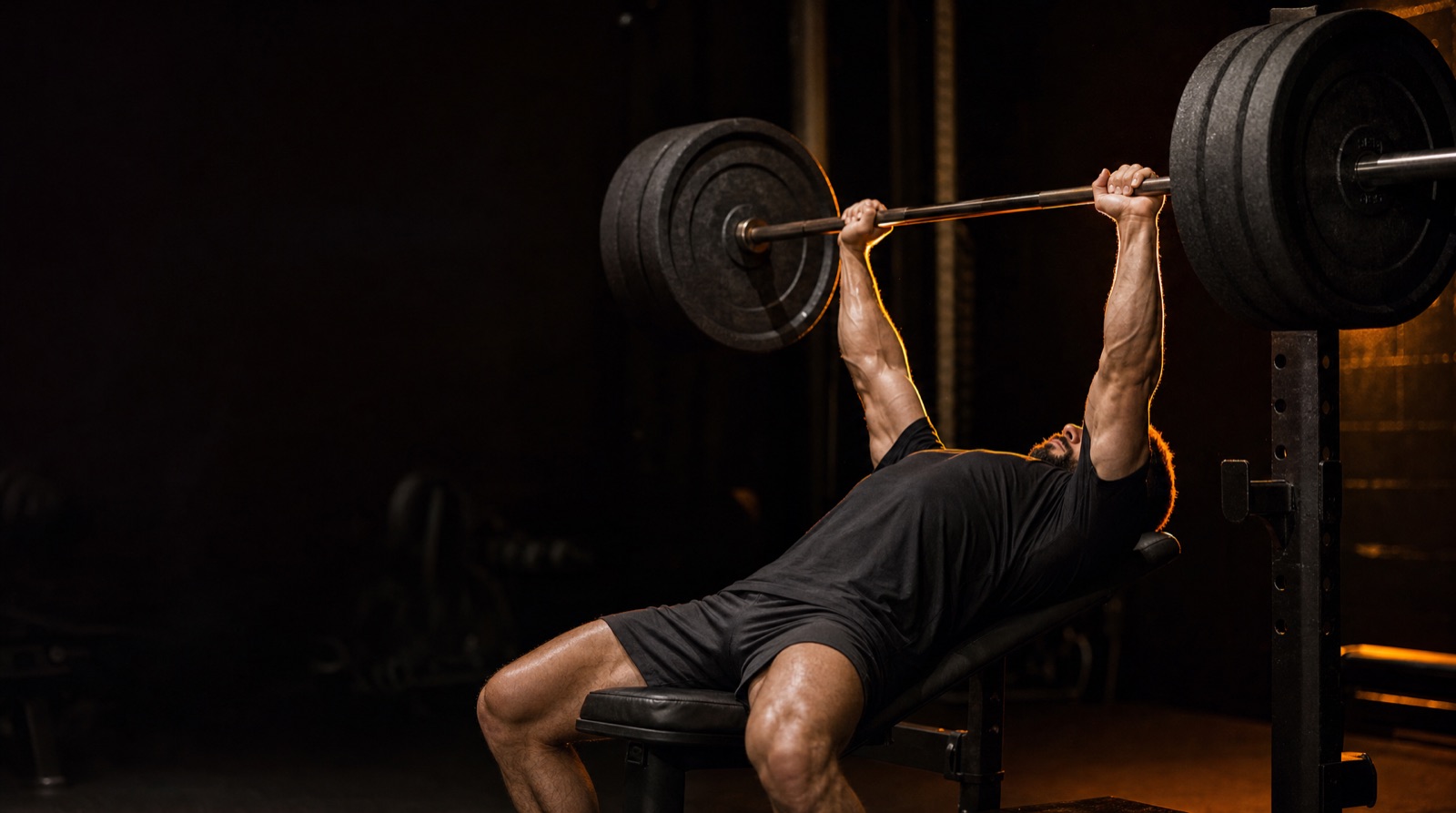
Stalled lifters don't need more effort. They need to stop bleeding force on every rep — through a loose back, a wandering bar, and a press that fights itself.
The Leak Fix
Stalled lifters don't need more effort. They need to stop bleeding force on every rep — through a loose back, a wandering bar, and a press that fights itself.
01 / The real problem
A stalled bench is rarely a strength problem. It's an efficiency problem. You're producing enough force — it just doesn't all reach the bar.
Three leaks drain most lifters: an upper back that goes soft against the pad, feet that sit idle instead of driving, and a bar that wanders off its line. Plug those and the same body moves more weight the same day — no new muscle required.
The shortest effective path isn't a guess. The bar touches under control, then drives up and slightly back so the lockout stacks directly over your shoulder — the one position where your skeleton, not just your muscle, holds the weight.
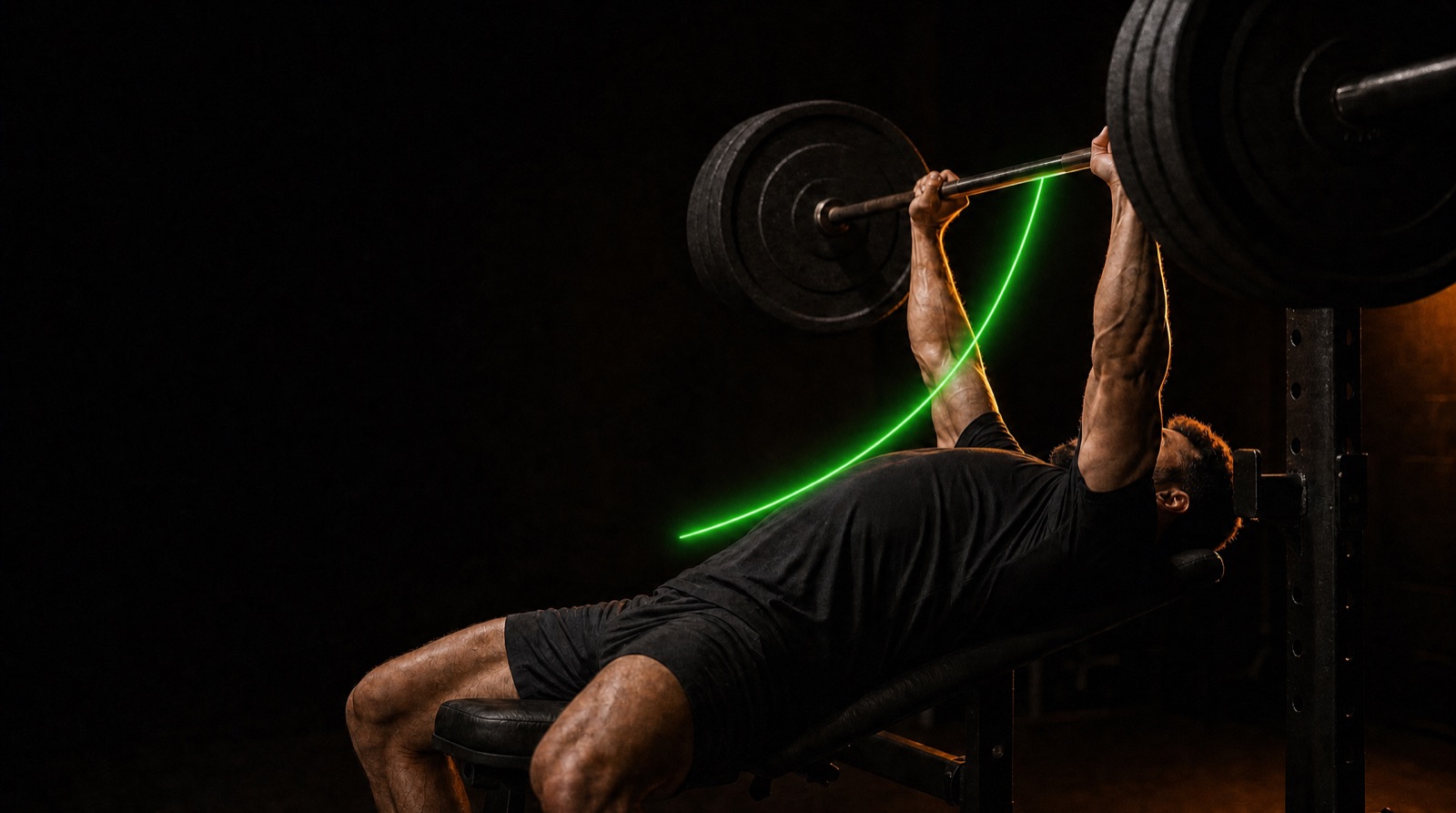
The version most lifters grind out is the opposite: a bar that drifts toward the face, loops, and asks the front delt to save a rep the triceps should have owned. Same weight, twice the work.
02 / Build the press
You can't just shove the bar up. The setup is the lift — each pillar loads the next. Skip one and the leak opens right back up.
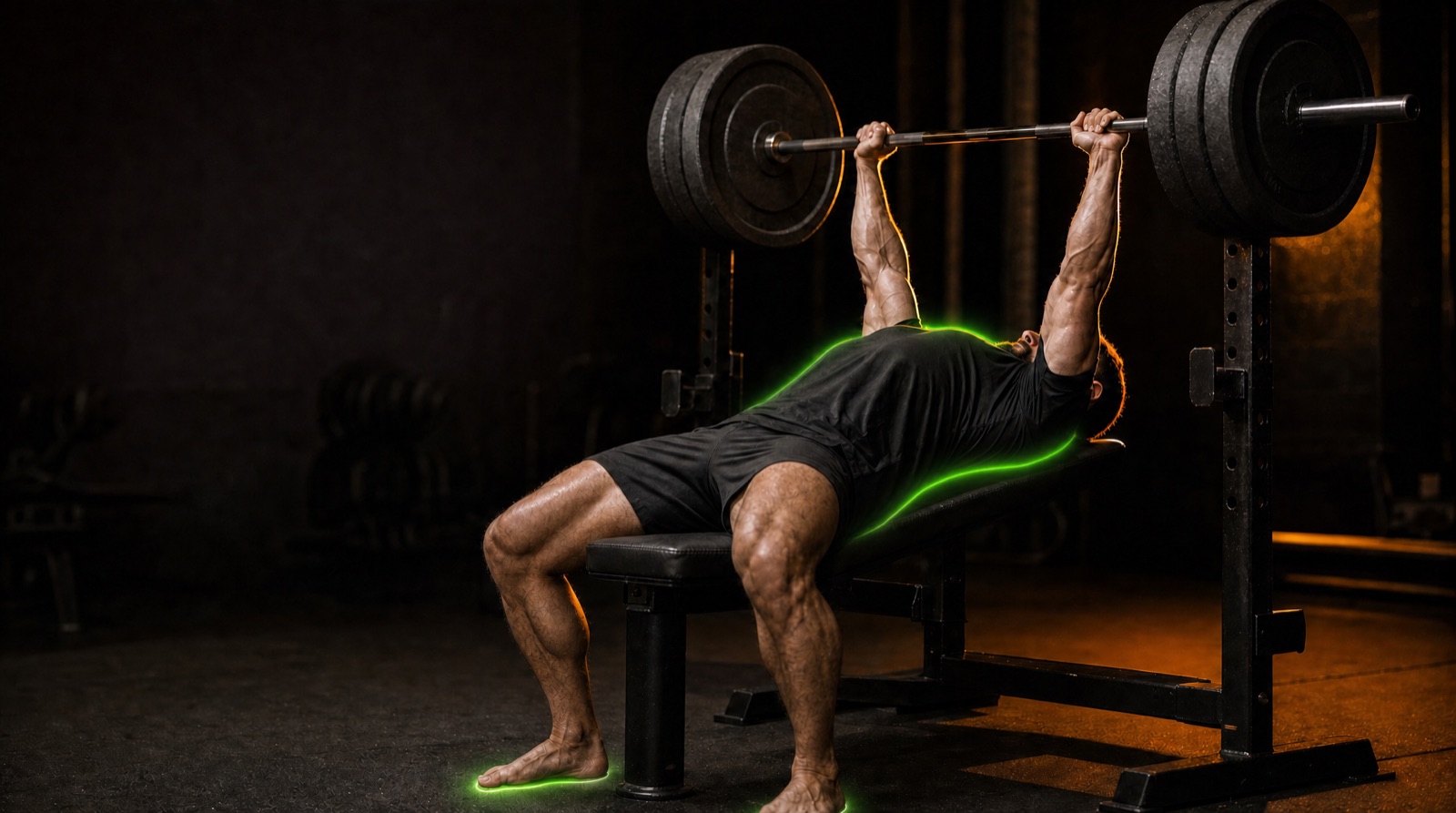
Most lifters lose the press before they unrack it — flat, loose upper back on the pad.
Fix: Pull your shoulder blades together and down toward your back pockets, and drive your traps into the bench. That protects the shoulder and lifts your chest to meet the bar. Then plant your feet and load them like springs — you're building a rigid platform, not resting.
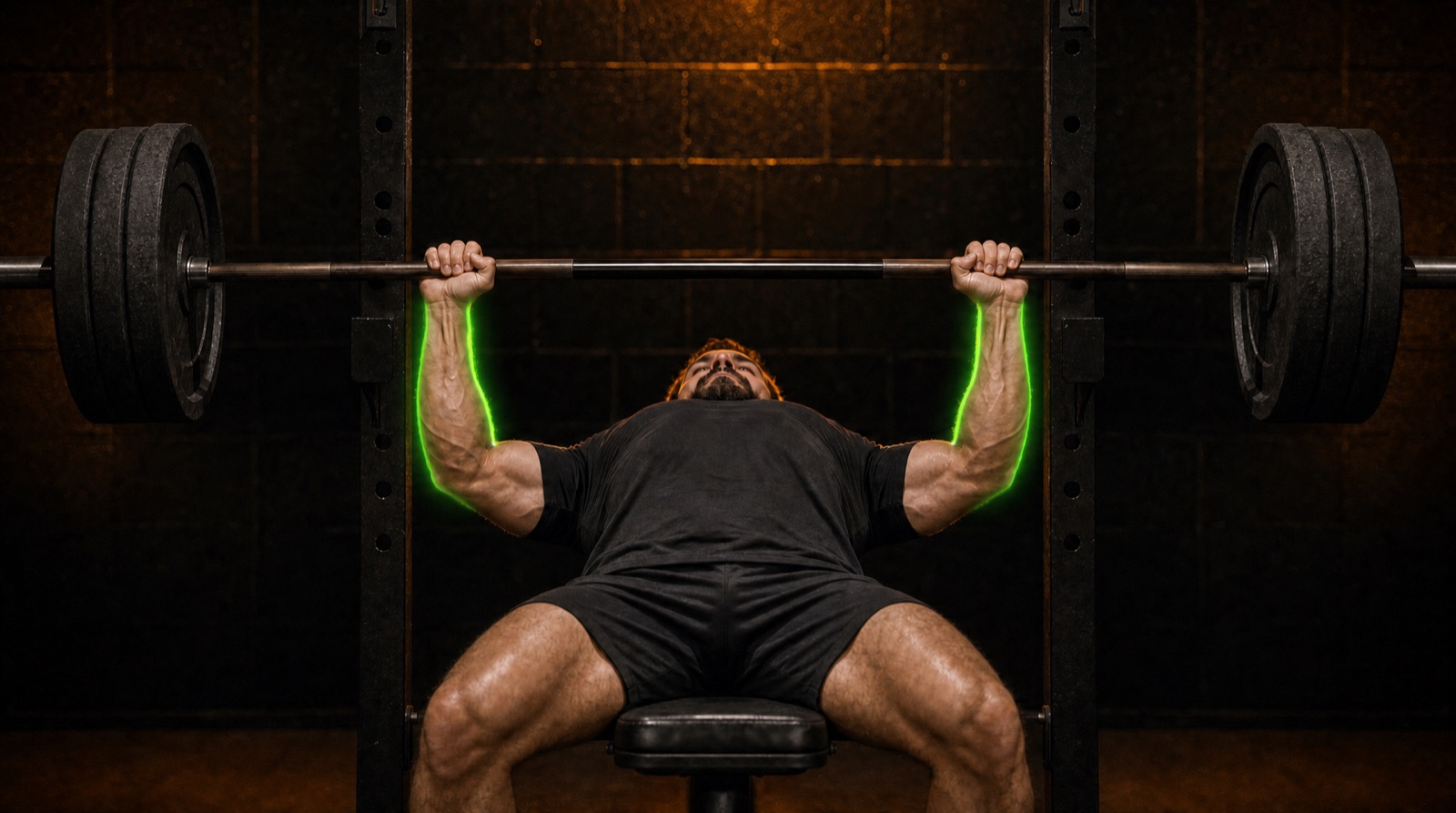
Your forearms are the pillars under the weight. Angled in or out, the structure leaks.
Fix: Set your grip width so that at the bottom your forearms are vertical — stacked straight under the bar, not slanted. Hold the bar low in the palm, over the heel of the hand, so the wrist stays neutral instead of bending back. Width is set by your build, not by the rings on the bar.
Treat the way down as a passive drop and you arrive at the chest with no tension to press out of.
Fix: Pull the bar down like you're rowing it — lats tight, controlled — to a touch point on the lower-to-mid chest with elbows tucked around 45–75°. The tighter your arch, the higher and shorter that touch sits. Pause a beat to kill momentum so the drive is all you.
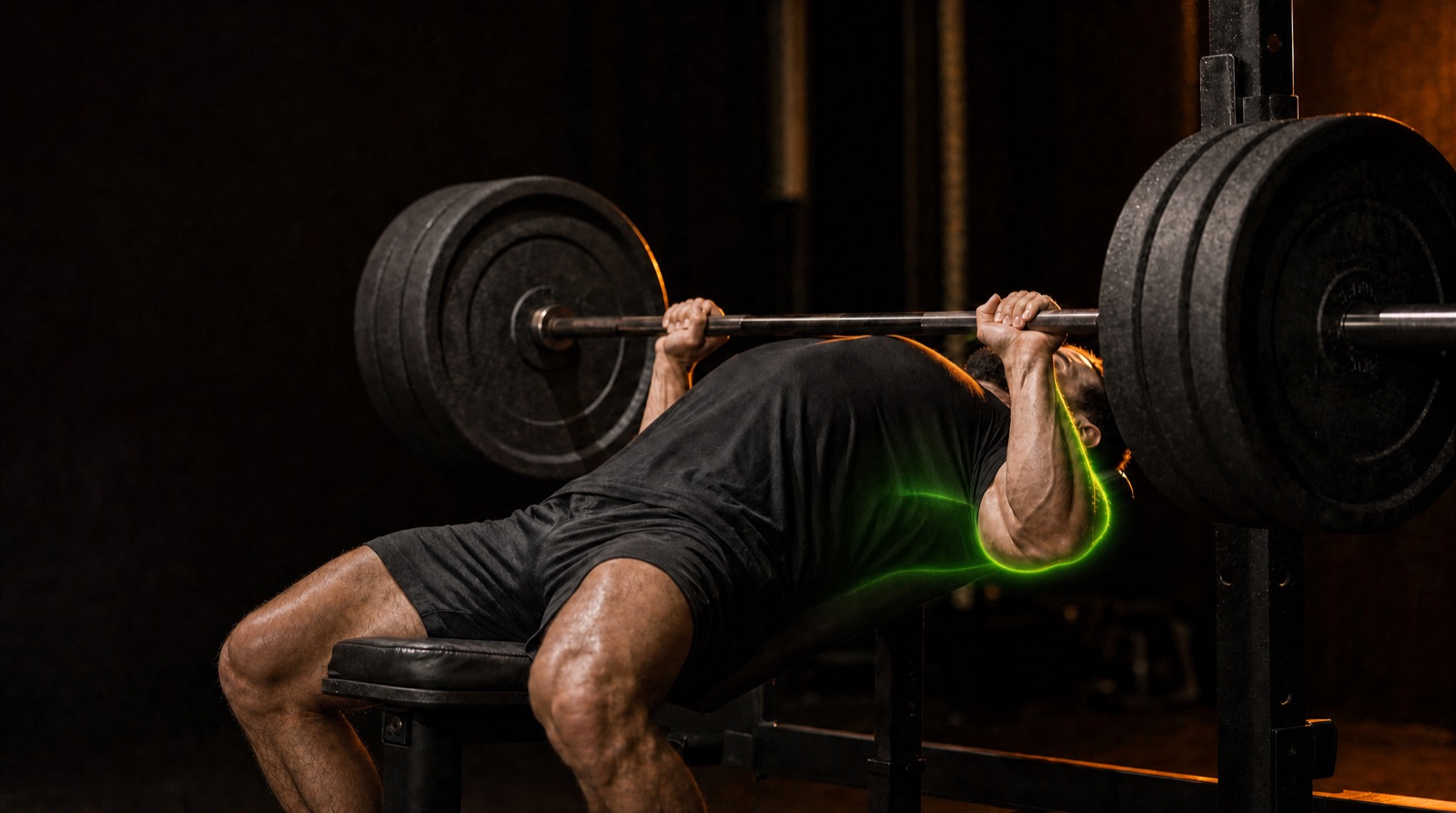
This is where the leak closes — or doesn't.
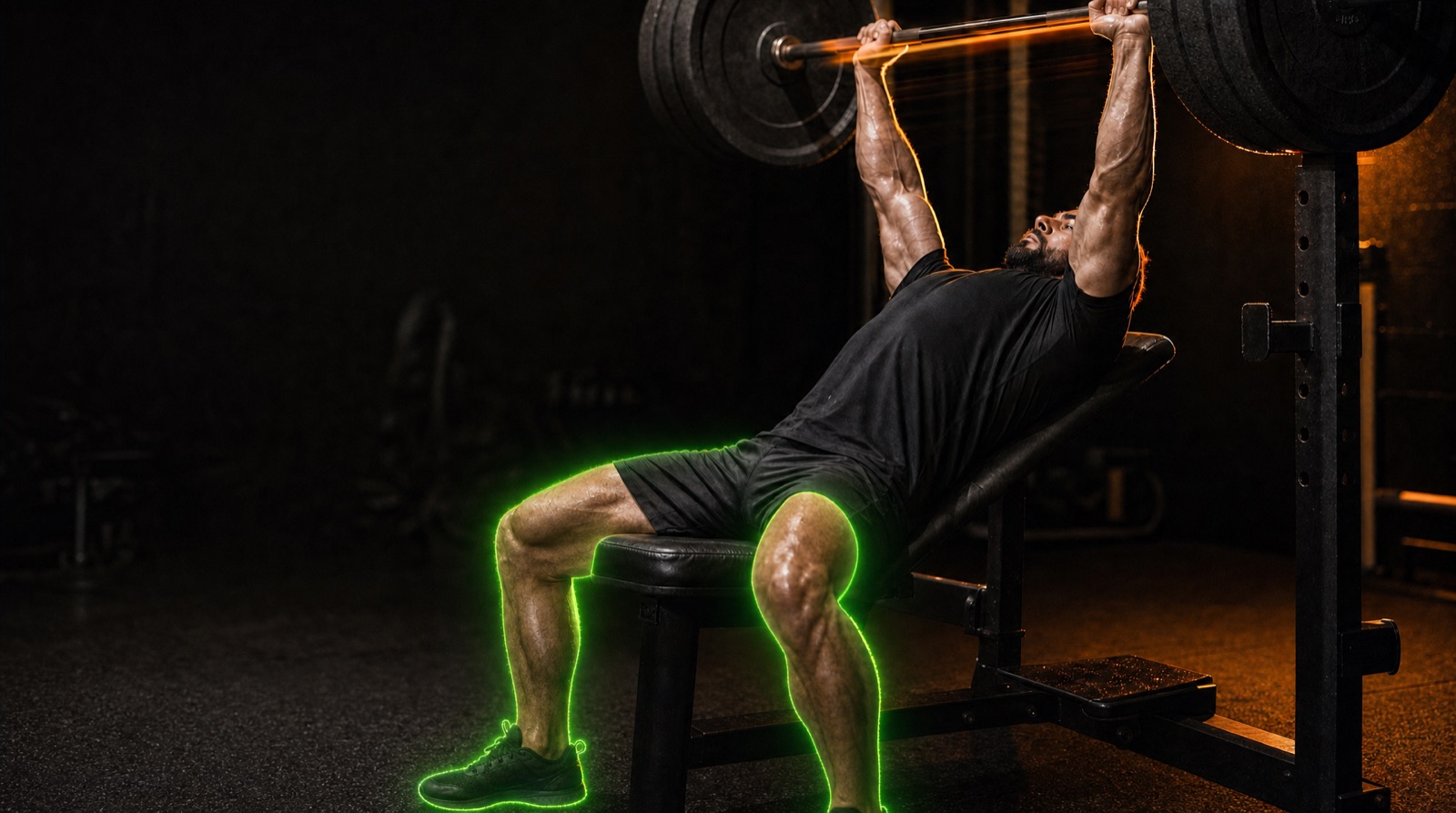
Fix: Start with the legs: push your feet into the floor and slightly toward the bench, shoving your upper back harder into the pad. Then drive the bar up and back toward the lockout over your shoulders — not straight off the face, not forward. Think about pressing yourself away from the bar. The path finishes stacked, where the triceps lock it out.
03 / The tools
Form gets you the rep. Numbers get you the plan. Four tools to map your next heavy session — no guessing.
Enter a recent set. Get your estimated max and the exact loads to train off it.
| Intensity | Load | Use it for |
|---|
Enter a target weight. See exactly what goes on each sleeve of a 45 lb bar.
Bench relative to bodyweight is the honest measure. Find your tier.
Where does the bar stall on a hard rep? That tells you what to train.
04 / Reference
Approximate raw bench standards by bodyweight (lbs). Run the rank tool above and your row lights up here. These are general benchmarks — bodyweight, leverages, and training age all move them.
Estimated 1-rep max in pounds, untrained through elite.
| Bodyweight | Beginner | Novice | Intermed. | Advanced | Elite |
|---|---|---|---|---|---|
| 150 | 100 | 140 | 175 | 235 | 290 |
| 180 | 115 | 160 | 205 | 270 | 330 |
| 200 | 125 | 175 | 220 | 290 | 355 |
| 220 | 135 | 185 | 235 | 305 | 375 |
| 240 | 140 | 195 | 245 | 320 | 390 |
The leaks that cost the most, and the one cue that closes each.
| What you feel | Likely cause | The fix |
|---|---|---|
| Bar drifts toward your face | Loose lats, no bar-path control | Row it down; drive up-and-back over the shoulder |
| Wrists bend backward | Bar sitting high in the fingers | Set the bar low in the palm, over the heel of the hand |
| Butt lifts off the bench | Over-arching or driving feet backward | Drive feet down, glutes stay glued |
| Elbows flare wide | No tuck — shoulders take the load | Tuck to ~45–75°, keep forearms stacked |
| Stalls mid-press | Mid-range weakness, wandering path | Paused reps + tonnage at the stall height |
| No power off the chest | Arriving soft, no tension | Build the arch and brace before the bar moves |
The next plate
The Primal Press Protocol is the full progression system that turns a clean, efficient press into plates on the bar — the programming, the cues, and the path our lifters used to add real weight.